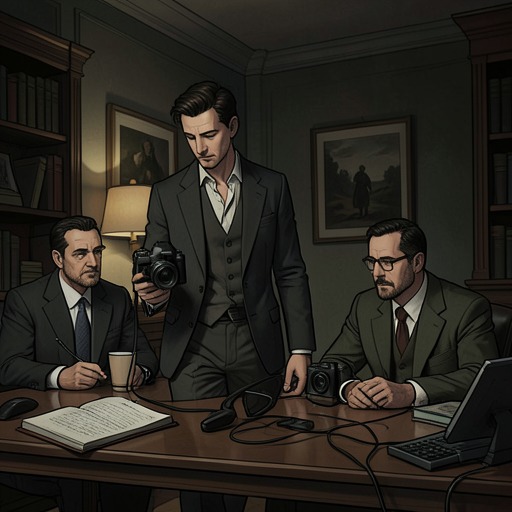
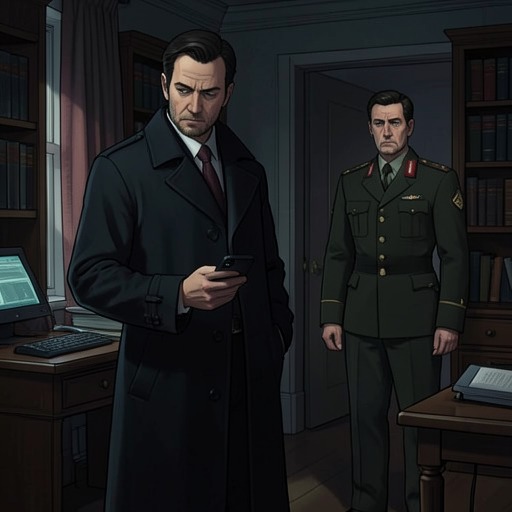
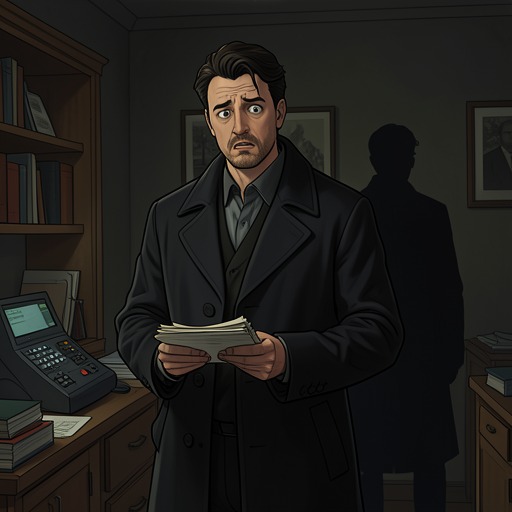
mid-October, about eleven in the morning
The Well-Dressed Detective
[Philip Marlowe](entity:character-recall-character-philip-marlowe-4cdb66984662) arrives at the [Sternwood place](entity:location-recall-location-7e3063faea9b) dressed as a private detective should be, summoned to deal with a problem backed by the family’s fortune. The vast house, its romantic stained glass, and its conspicuous wealth establish a world in which old money and private troubles sit uneasily together.
Before he can meet the General, [Carmen Sternwood](entity:character-recall-character-carmen-sternwood-21a803590b09) approaches him with teasing, disoriented flirtation. Marlowe catches her when she lets herself fall, and [Norris](entity:character-recall-character-norris-9414d7350869), the composed butler, identifies her and leads Marlowe onward.
shortly after Marlowe arrives
The General in the Orchid House
[Norris](entity:character-recall-character-norris-9414d7350869) takes Marlowe into the hot greenhouse, where [General Guy Sternwood](entity:character-recall-character-general-guy-sternwo-59b6a64cae54) lives among orchids, confined to a wheelchair and gravely ill. The General speaks with dry wit about his failing body and explains that [Rusty Regan](entity:character-recall-character-rusty-regan-5b0066ddc240), his former son-in-law and cherished companion, disappeared a month earlier without saying goodbye.
The General says he is being blackmailed again. He gives Marlowe three promissory notes signed by Carmen and a card from [Arthur Gwynn Geiger](entity:character-recall-character-arthur-gwynn-geiger-61929dfab1f5), who presents the notes as gambling debts while implying they may be paid. Marlowe recognizes that the documents are a probe: Geiger wants to discover whether the General fears exposure enough to pay.
during the first interview
A Job Against Blackmail
The General says he previously paid [Joe Brody](entity:character-recall-character-joe-brody-70450918cf41) five thousand dollars to leave Carmen alone. He describes Vivian as clever and ruthless and Carmen as childlike and destructive, and admits that neither daughter has much moral sense. Marlowe recommends paying a modest sum if that would end the nuisance, but the General’s pride makes clear that he wants the matter investigated.
Marlowe agrees to take Geiger off the General’s back, with authority to negotiate if Geiger seems legitimate. The General tells [Norris](entity:character-recall-character-norris-9414d7350869) to pay what seems appropriate, but Marlowe refuses money in advance. Norris then says Vivian wants to see him, explaining that she watched Marlowe enter the greenhouse and has misunderstood the purpose of the visit.
later that morning
Vivian’s False Assumption
Vivian receives Marlowe in a lavish white room and assumes he has been hired to find Rusty. She asks whether he can locate her husband, but Marlowe refuses to claim that the General has assigned such a task. Their exchange turns sharp when she tries to draw information from him and he resists her cross-examination.
She explains that Rusty drove away about a month earlier and that his car was found in a private garage. Marlowe confirms only that he has heard of Rusty’s disappearance, then leaves without promising to search. Her reaction makes clear that the family’s concern about Rusty is separate from the blackmail matter, even if she suspects otherwise.
that afternoon
The Rare-Book Front
After a cursory library search, Marlowe visits [Arthur Gwynn Geiger](entity:character-recall-character-arthur-gwynn-geiger-61929dfab1f5)’s storefront on [Hollywood](entity:location-recall-location-df7336761502) Boulevard. The display suggests a rare-book business, but the employee [Agnes Lozelle](entity:character-recall-character-agnes-lozelle-44a165736313) cannot answer basic questions about famous editions. Her uncertainty confirms that the shop’s respectable appearance is a cover rather than a serious bookseller’s operation.
Marlowe waits while a customer arrives and leaves with a wrapped parcel. He tails the man to a bungalow court and retrieves the abandoned package from behind a cypress. Inside is an elaborate, illicit book for lending, revealing the store’s real trade and giving Marlowe a first concrete lead into Geiger’s operation.
later that rainy afternoon
The Coded Customer List
Marlowe identifies Geiger’s residence on Laverne Terrace and watches the shop from his car as rain floods the streets. Geiger arrives in a cream-colored coupe, accompanied by a young man in a leather jerkin. Near evening, Carmen’s maroon Packard turns up at the house, and she goes inside.
At about seven-twenty a bright flash bursts from the house, followed by Carmen’s strange scream and three gunshots. Marlowe rushes to the front but hears someone escape down the rear steps. Breaking a window, he enters and finds Carmen drugged and naked in a chair before [Geiger’s concealed camera](entity:object-recall-object-geiger-s-concealed-cam-d8890be612b1); Geiger lies dead nearby, shot three times. The plateholder is gone, leaving the crucial image—and the identity of whoever took it—unsettled.
the evening Geiger is killed
Marlowe Removes Carmen
Marlowe dresses Carmen, who remains dazed from the drug, and gets her to sleep on Geiger’s divan. He searches for the missing plateholder, then finds [Geiger’s coded notebook](entity:object-recall-object-geiger-s-coded-noteboo-529fce3e6333) in a locked desk; its hundreds of names and addresses suggest a substantial customer racket. He takes the notebook and Carmen’s belongings, but does not find the photographic plate.
He carries Carmen to her Packard and drives her back to the [Sternwood estate](entity:location-recall-location-sternwood-estate-f8b81fe7e64a) without lights. [Norris](entity:character-recall-character-norris-9414d7350869) brings Mathilda to help with her, and Marlowe leaves the unconscious girl in the household’s care. His choice protects the General from immediate scandal but also keeps a murder and its evidence outside the police investigation.
later that night
The Vanished Body
Marlowe returns to [Geiger’s house](entity:location-recall-location-62e8099f98f2) and discovers that the body has disappeared. Someone has removed wall hangings and laid a rug over the place where Geiger fell; the marks in the carpet suggest that the body was dragged toward the front door. The killer had fled, and the police have not arrived.
Marlowe decides not to report what he knows, reasoning that a missing body gives him room to investigate without exposing Carmen. At home, he studies the coded notebook and concludes that it lists Geiger’s customers. The decision to conceal the crime begins a chain of unofficial investigations and later compromises his standing with the police.
the next morning
The Buick in the Surf
[Bernie Ohls](entity:character-recall-character-bernie-ohls-16f1e7a1a29c) calls Marlowe with news that a Buick belonging to the Sternwoods has been recovered from the water near [Lido Fish Pier](entity:location-recall-location-328b9b385dc4), with a dead man inside. Marlowe goes with him to the scene. The dead driver is [Owen Taylor](entity:character-recall-character-owen-taylor-167d8b0a034b), the Sternwood chauffeur whom Marlowe saw cleaning cars the previous day.
The pier’s broken railing and the car’s trajectory could suggest an accident or suicide, but the medical examiner finds a bruise consistent with a blow from a covered weapon. Ohls tells Marlowe that Taylor once took Carmen to Yuma, apparently intending to marry her, and that the family allowed him to return to work despite his record. Marlowe urges Ohls to spare the sick General needless trouble.
later that day
The Photograph Arrives
Vivian visits Marlowe’s office with a photograph of Carmen naked in Geiger’s chair. A caller has demanded five thousand dollars for the negative and remaining prints, warning that there is also a police danger connected to the image. Vivian says Carmen is at home recovering from illness and insists she was not out the previous night.
Marlowe sees that the threatened scandal is not the only risk: the photo may connect Carmen to a killing. He tells Vivian to find the money, while keeping his own role and knowledge guarded. She reveals that she can borrow from [Eddie Mars](entity:character-recall-character-eddie-mars-f2d0393fdb88) and that his wife is the woman Rusty ran away with, strengthening the tangled connection between the Sternwoods and Mars’s circle.
that afternoon
The First Trail to Brody
Marlowe returns to Geiger’s bookstore and finds Agnes shaken while men pack the illicit books for removal. He tails the truck through [Hollywood](entity:location-recall-location-df7336761502), eventually spotting it in the garage of an apartment building. The boxes are being delivered to apartment 405, occupied by Joseph Brody.
Brody is the same man the General paid to leave Carmen alone, and the transfer suggests he is taking over Geiger’s operation. Marlowe has now connected the old blackmail payment to the present racket and has a likely destination for the missing photographs. He goes to his office knowing a visitor is waiting.
late afternoon
Vivian Seeks Marlowe’s Help
Vivian is waiting in Marlowe’s office. She and Marlowe begin with mutual barbs, then turn to [Owen Taylor](entity:character-recall-character-owen-taylor-167d8b0a034b)’s death. She says Owen loved Carmen and believes he might have been better for her than the men around the family, while Marlowe tells her that Owen was found in the Buick.
She admits she was gambling at [Eddie Mars](entity:character-recall-character-eddie-mars-f2d0393fdb88)’s Cypress Club the night Owen died, and says Owen took the car without permission. Marlowe asks whether Owen knew about the nude photograph; she cannot say. Vivian agrees to seek the five thousand dollars, and Marlowe promises he may be able to help without explaining how.
that afternoon
Brody’s Apartment
Marlowe confronts [Joe Brody](entity:character-recall-character-joe-brody-70450918cf41) at the [Randall Place apartment house](entity:location-recall-location-fb1ec74c485e). Brody denies knowing Geiger, then lets Marlowe in after hearing that he has the coded customer list. Brody produces a gun and tries to control the meeting, while Agnes hides behind a curtain.
Marlowe argues that Brody has acquired the books and could make a fortune by continuing the lending racket without blackmail. He also accuses Brody of killing Geiger and taking the photographic plate. Brody denies the murder, but Marlowe’s account of the missing photos and a witness puts pressure on him to produce them.
during Marlowe’s confrontation with Brody
Carmen Confronts Brody
As Brody prepares to fetch the pictures, the door buzzer rings. Carmen enters with her small revolver and demands the photographs, accusing Brody of killing Geiger. Her arrival makes clear that she remembers more of the night than she has admitted and that she may be capable of sudden violence.
Agnes turns her gun on Carmen, and Marlowe wrestles it away. Brody grabs for Carmen’s weapon; it fires into a window, and he falls. Marlowe secures all the guns and takes the developed plate and five glossy prints from Brody. He sends Carmen home without the photograph or her revolver, preventing another immediate escalation.
after Carmen leaves Brody’s apartment
Brody’s Story
With the photographs recovered, Marlowe questions Brody about how he obtained them. Brody says he followed Geiger, then pursued the man who fled after the shooting. He claims he struck [Owen Taylor](entity:character-recall-character-owen-taylor-167d8b0a034b), took the plateholder, and later realized what the photograph showed; he insists that he did not kill Geiger or cause Taylor’s death.
Brody’s account fits the evidence Marlowe has gathered: Owen had a personal motive to stop Geiger from photographing Carmen, while Brody had a commercial motive to exploit the image and seize the books. Marlowe warns Brody that a false story will not save him from the law. Before they can settle their next move, the buzzer sounds again.
that evening
Brody Is Shot
Brody goes to answer the door with his Colt ready. Someone outside calls his name and fires twice through the opening; Brody collapses against the door. Marlowe runs after the fleeing shooter and sees a young man in a leather jerkin fire back before escaping.
Marlowe recognizes the gunman as [Carol Lundgren](entity:character-recall-character-carol-lundgren-0f999c0c0f9b), Geiger’s devoted companion from the bookstore. He catches Lundgren nearby and forces him into the car. Lundgren identifies himself and says little, but Marlowe tells him that Brody was not the man who killed Geiger. The new murder is driven by Lundgren’s mistaken revenge.
later that night
Geiger’s Body Returned
Marlowe takes Lundgren back to [Geiger’s house](entity:location-recall-location-62e8099f98f2) and confronts him with the fact that he has a key and a private room there. Lundgren attacks Marlowe, but Marlowe subdues and handcuffs him. In the second bedroom, Marlowe finds Geiger’s body laid out with candles and the missing silk hangings arranged across him.
The discovery resolves the mystery of the body’s disappearance: Lundgren had hidden it, then returned to care for the dead man he loved. Marlowe calls Ohls and reveals that [Owen Taylor](entity:character-recall-character-owen-taylor-167d8b0a034b)’s revolver had three empty shells, then shows the police where the shots went. Lundgren is taken into custody, and the Geiger murder is effectively explained.
late that night
The Police Conference
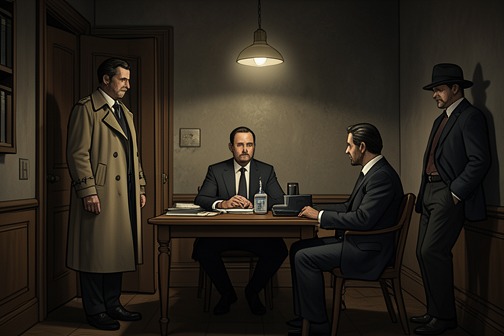
Ohls brings Marlowe and Lundgren to [Taggart Wilde](entity:character-recall-character-taggart-wilde-01c440b44e71)’s house, where [Captain Cronjager](entity:character-recall-character-captain-cronjager-c6c12ddad3cc) is already investigating Brody’s death. Marlowe gives the story but omits Carmen’s visit to Brody’s apartment and [Eddie Mars](entity:character-recall-character-eddie-mars-f2d0393fdb88)’s earlier visit to [Geiger’s house](entity:location-recall-location-62e8099f98f2). Cronjager condemns Marlowe for withholding the Geiger murder and for setting events in motion that led to Brody’s death.
Marlowe argues that Owen killed Geiger and that Brody was a crook but not a killer. He also demonstrates that Geiger’s store was an illicit book operation protected by the local police, making a public investigation dangerous to the Sternwoods. [Wilde](entity:character-recall-character-wilde-65c636cf5f9c) and Ohls agree to contain the scandal and keep the family’s name out of the official account.
the following morning
The Official Story
Newspapers report that Brody killed Geiger over a wire-service operation and that Lundgren killed Brody in revenge. They credit Cronjager with solving both cases, while [Owen Taylor](entity:character-recall-character-owen-taylor-167d8b0a034b)’s death is presented separately as a suicide after a car plunged from the pier.
The official account suppresses the connections Marlowe has uncovered: Carmen’s photograph, the illicit books, the Sternwood family, and the likely circumstances of Owen’s death. The case appears closed, but Marlowe’s omissions and the unanswered disappearance of Rusty remain active beneath the public narrative.
the next day
The Missing-Persons File
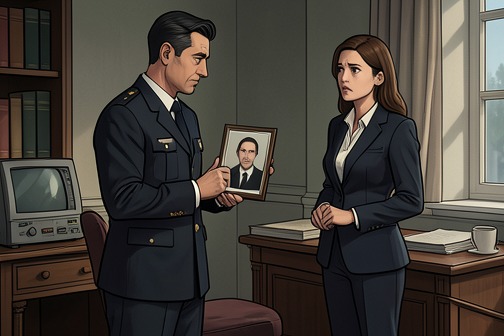
Marlowe visits [Captain Gregory](entity:character-recall-character-captain-gregory-c497c763c40e) at the [Missing Persons Bureau](entity:organization-recall-organization-missing-persons-34bf30ffc71f) to ask what the police know about Rusty. Gregory explains that Regan disappeared on September 16, and that his abandoned car was found four days later at the [Casa de Oro](entity:location-recall-location-47da192af99b). [Eddie Mars](entity:character-recall-character-eddie-mars-f2d0393fdb88)’s wife vanished around the same time, and a witness thought a man resembling Regan had been seen with her.
Gregory lays out the apparent possibilities: Regan’s fifteen thousand dollars could have attracted a robber, but Regan was experienced and armed; alternatively, he may have left with [Mona Mars](entity:character-recall-character-mona-mars-a5c3a66b8033). Gregory rules out Eddie as too calculating to create an obvious murder trail and says the Bureau has no current lead. Marlowe studies Regan’s photograph and recognizes a man whose expression seems neither easy to bully nor eager for wealth.
after Marlowe’s Missing Persons Bureau visit
The General Ends the Assignment
[Norris](entity:character-recall-character-norris-9414d7350869) calls to say the General is unwell and believes Marlowe’s work is complete. Marlowe returns the notes and card and says he will destroy Carmen’s photographs. Norris confirms that the General knows nothing about the pictures and offers a five-hundred-dollar check.
Marlowe reflects that Rusty may simply have left with Mona, while the Geiger matter seems resolved. Although he thinks the sensible course is to accept the money and stop, he calls [Eddie Mars](entity:character-recall-character-eddie-mars-f2d0393fdb88) and arranges to meet him. His curiosity about Regan and the apparent gaps in the case outweigh his decision to quit.
that evening
Mars’s Cypress Club
At the Cypress Club in [Las Olindas](entity:location-recall-location-las-olindas-b05e26b8fa55), [Eddie Mars](entity:character-recall-character-eddie-mars-f2d0393fdb88) says he has heard the real version of the Geiger affair and offers Marlowe information about Regan. He denies killing Regan and explains that Geiger’s method was to present apparently valid notes, then test whether the target feared a deeper secret enough to pay.
Mars says Vivian is a costly roulette player and admits that she is gambling at the club that night. He does not give Marlowe a useful answer about Regan, but his account suggests Geiger was testing the General’s vulnerability rather than pursuing an ordinary debt. Marlowe goes to watch the tables and sees Vivian winning heavily.
later that evening
Vivian’s High-Stakes Win
Vivian presses her winnings onto the red at the roulette table, taunting the house to cover the bet. [Eddie Mars](entity:character-recall-character-eddie-mars-f2d0393fdb88) authorizes the wager and supplies the additional stake; the red wins, and Vivian takes the money. Her strained insistence on one final play suggests that the gamble carries more than ordinary excitement.
Marlowe notices the social performance around the game and the tension between Vivian and Mars. He leaves the club and walks into the fog outside, where he hears a masked man threaten a woman and demand her bag.
after Vivian’s roulette win
The Foggy Robbery
The masked man holds up the woman, who is later revealed as Vivian, and orders her to hand over her bag. Marlowe recognizes the robber’s chuckle, calls him Lanny, and bluffs that he has him covered. Lanny puts down the bag, and Marlowe takes his gun before letting him leave quietly.
Vivian retrieves her bag without showing much reaction to the danger and asks Marlowe to take her to her escort. The episode suggests that someone around Mars’s club is testing or manipulating her, while Marlowe’s intervention gives him a more direct connection to her than their earlier verbal sparring.
late that evening
The Drunken Escort
Vivian’s escort, Larry Cobb, is unconscious in a Cadillac after drinking himself into a stupor. She mocks his wealth and helplessness, pays the attendant to arrange a ride home for him, and asks Marlowe to drive her instead. In the car, she admits that she won more than she borrowed from Mars but evades Marlowe’s question about what Mars has on her.
She speaks of her fear for her father and sister and of the family’s shame. Marlowe recognizes that the roulette scene and attempted robbery may have been staged for his benefit, but he cannot get Vivian to explain the leverage involved. Their conversation shifts into intimacy as he drives her away from the club.
after leaving Las Olindas
The Rejected Seduction
Near [Del Rey](entity:location-recall-location-del-rey-ec1ff5a6e0bf), Vivian asks Marlowe to stop by the water, then falls into his arms and invites him to take her home. He kisses her, but when he again asks what Mars has on her, she stiffens and realizes that he is not willing to trade his professional role for a sexual relationship.
Marlowe tells her that he likes kissing her but is working for her father, not seeking an affair. Vivian accuses him of being cold and asks to be taken home. Their closeness ends abruptly, leaving her anger and the mystery of Mars’s hold on her unresolved.
late that night
Carmen in Marlowe’s Bed
Marlowe returns to the [Hobart Arms](entity:location-recall-location-hobart-arms-dc84f1767920) and finds Carmen naked in his bed, giggling and trying to seduce him. She says she entered with a stolen card and persuaded the manager that Marlowe had told her to wait. He refuses her advances, reminding her that he is her father’s employee and that he will not exploit her vulnerability.
Carmen’s mood turns suddenly hostile when he persists. Marlowe orders her to dress and leave, and she does so in a rigid, disturbed state. He then tears apart the bed, shaken by the intrusion and by the knowledge that Carmen’s conduct is not merely playful.
the following morning
The Persistent Plymouth

A gray Plymouth follows Marlowe through the rain. He confronts its driver, a small man who denies tailing him, and invites him to come to the office if he has something to say. The man later appears and identifies himself as [Harry Jones](entity:character-recall-character-harry-jones-b7143ec47bb1).
Jones says he has information for sale and connects himself to Agnes and [Joe Brody](entity:character-recall-character-joe-brody-70450918cf41). He claims [Eddie Mars](entity:character-recall-character-eddie-mars-f2d0393fdb88) had [Rusty Regan](entity:character-recall-character-rusty-regan-5b0066ddc240) killed, but Marlowe dismisses the claim as unsupported. Jones then offers a more concrete lead: Agnes has located [Mona Mars](entity:character-recall-character-mona-mars-a5c3a66b8033), who may be held in a hideout near [Realito](entity:location-recall-location-realito-edc82e550362). Marlowe agrees to pay two hundred dollars for the information, though the story’s neatness makes him suspicious.
that evening, at the Fulwider Building
Jones Names Canino
Marlowe goes to the [Fulwider Building](entity:location-recall-location-fulwider-building-481b20dcb95a) to meet Jones and overhears a conversation through an office door. The visitor is [Lash Canino](entity:character-recall-character-lash-canino-9f81cd479266), a feared gunman who works for [Eddie Mars](entity:character-recall-character-eddie-mars-f2d0393fdb88). Jones reluctantly tells Canino that Agnes is hiding and that Marlowe knows details about Brody’s murder and Carmen’s visit to the apartment.
Canino presses Jones to reveal Agnes’s location. Jones initially resists, but eventually gives the address of an apartment on Bunker Hill. Canino offers him a drink, and Jones accepts. Marlowe hears the sound of a sudden illness and realizes that Canino has poisoned him with cyanide.
minutes after Canino leaves
A Dead Informant
Marlowe enters the office and finds Jones dead, his face fixed in a spasm. The whiskey and the faint smell of bitter almonds confirm cyanide poisoning. He searches Jones but finds nothing useful about Agnes.
Agnes calls the office, asking for Jones. Marlowe tells her Jones has gone and offers the promised two hundred dollars in exchange for the location of Mona. Agnes distrusts him and fears it is a trap, but eventually agrees to meet him beside Bullock’s Wilshire. Marlowe leaves the dead man behind, knowing Canino may return.
later that rainy night
Agnes Sells the Hideout
Agnes meets Marlowe in the gray Plymouth and takes his two hundred dollars. She describes seeing [Mona Mars](entity:character-recall-character-mona-mars-a5c3a66b8033) riding with Canino and says Joe followed them to a house beyond [Realito](entity:location-recall-location-realito-edc82e550362), near a garage and a cyanide plant. The location appears to be a hideout where Mona is being kept while the authorities believe she ran away with Rusty.
Agnes takes the money and leaves town, insisting she has had a raw deal. Marlowe recognizes that she has sold information rather than offered loyalty, but the lead gives him a reason to investigate whether Mars is concealing his wife and using her supposed flight to explain Regan’s disappearance.
that night, after meeting Agnes
The Road to Realito
Marlowe drives north through heavy rain toward [Realito](entity:location-recall-location-realito-edc82e550362). Near the town, two tires go flat on a road scattered with tacks. He spots a light on a side road and suspects it may belong to Art Huck’s garage, the place Agnes described.
Before approaching, Marlowe takes a gun from a hidden compartment in his car. He sees a brown coupe outside a nearby frame house and recognizes the setup as a likely refuge for Mona. The false accident has brought him directly to the people he is investigating, but he enters the garage without knowing whether Canino is already inside.
shortly after Marlowe reaches the garage
Canino’s Trap
Art Huck grudgingly lets Marlowe into the garage, where Canino is waiting. Canino questions him about his journey and offers him a drink, while Huck repairs the tires. Marlowe senses danger but drinks only after watching Canino drink first.
The two men coordinate without an obvious signal: Huck traps Marlowe with an inflated inner tube, and Canino strikes him with a roll of coins. Marlowe is knocked unconscious. When he comes to, he is handcuffed and tied to a couch in the house beside the garage, where a platinum-haired woman watches him.
later that night
Mona Reveals Herself
The woman identifies herself through Marlowe’s deductions as [Mona Mars](entity:character-recall-character-mona-mars-a5c3a66b8033), Eddie’s wife. She has disguised herself with a silver wig and says she is hiding to protect Eddie from suspicion in Rusty’s disappearance. She insists Eddie did not kill Regan and claims not to have seen him for months.
Marlowe argues that the concealment is too elaborate to be innocent and that Canino is a killer acting for Eddie. He tells Mona that Canino has just poisoned [Harry Jones](entity:character-recall-character-harry-jones-b7143ec47bb1). Though she loves Eddie and resists Marlowe’s accusations, she cuts Marlowe’s ropes and helps free him from the couch, while Canino keeps the key to the handcuffs.
minutes later
Marlowe Walks into the Rain
Mona urges Marlowe to leave and promises that Eddie did not kill Regan. She says Regan is alive and will be found when he chooses to surface. Marlowe warns that Canino may kill her once he discovers she has released him, but Mona refuses to go with him.
Marlowe leaves the house and crosses to the road in the rain, unable to accept that she will remain alone with Canino. He finds his car repaired and retrieves his other gun. When Canino’s car returns, Marlowe hides nearby and waits for the next move.
that same night
The Gunfight at Realito
Marlowe starts Canino’s car to draw him outside, then hides behind it. Canino fires repeatedly at what he believes is Marlowe behind the wheel; Marlowe fakes a death cry. Mona comes out to inspect the supposed body, and Marlowe shouts that he can see Canino through the window.
Canino lunges toward the car and fires again. Marlowe shoots him four times, killing him. Mona finds the key to the handcuffs on Canino’s body and frees Marlowe. She asks whether he had to kill Canino; Marlowe says yes, and she accepts the answer with bitterness.
the next morning
Gregory’s Warning
[Captain Gregory](entity:character-recall-character-captain-gregory-c497c763c40e) tells Marlowe that the police know about the shooting and that, although killing Canino may have been justified, the homicide investigators will not praise him. Gregory admits that he may have known where Mona was and may have allowed Eddie and Mona to maintain their cover, hoping the arrangement would eventually reveal something about Regan.
He says Eddie has acknowledged hiding Mona and hiring Canino as protection, while denying knowledge of Canino’s murders or Geiger’s racket. Gregory advises Marlowe to leave the Sternwoods alone if he truly wants to help them. Marlowe says he will not search for Regan, but Gregory doubts that he means it.
later that day
Marlowe Reconsiders
Back at his apartment, Marlowe cannot sleep. He replays the events at [Realito](entity:location-recall-location-realito-edc82e550362) and the official follow-up, including the discovery of Canino’s fingerprint and the statements given to the authorities. In his mind, [Eddie Mars](entity:character-recall-character-eddie-mars-f2d0393fdb88) appears at the investigation and greets Mona as if she were still his wife, while she refuses to answer him.
The case feels closed on paper but not in Marlowe’s mind. He tells himself that Gregory knows something, then receives a call from [Norris](entity:character-recall-character-norris-9414d7350869): the General wants to see him. Marlowe prepares to return to the estate, carrying Carmen’s revolver with him.
five days after Marlowe’s first visit
The General’s Reproach
Marlowe meets the General in his bedroom. The General says he did not ask Marlowe to investigate Rusty and accuses him of betraying a trust. Marlowe offers to return the money and explains that he went to Gregory because he believed the General was testing him and feared Regan might be involved in the blackmail.
Marlowe describes how Vivian’s remark about the police finding Regan’s car led him to suspect that the [Missing Persons Bureau](entity:organization-recall-organization-missing-persons-34bf30ffc71f) already had a file. He admits that he deliberately approached Gregory without disclosing more than the police likely knew. The General questions whether this was ethical, and Marlowe defends his method as part of the detective’s duty to protect his client.
during the same interview
The General Rehires Marlowe
Marlowe argues that Geiger’s apparently legal notes were designed to test whether the General feared some hidden scandal, and that the real pressure may have been the uncertainty surrounding Regan. He believes the General cared less about money than about whether Regan had been sincere and whether his own judgment of character had failed.
The General first says that Marlowe is still trying to solve the puzzle, then admits he wants to know that Regan is alive and well. He offers a thousand dollars to find him, without demanding that Regan return or reveal his location. The General’s affection for Rusty is personal and unembarrassed, and Marlowe agrees to try.
immediately after the interview
The Butler’s Explanation
[Norris](entity:character-recall-character-norris-9414d7350869) meets Marlowe at the foot of the stairs. Asked what had drawn the General to Regan, Norris answers that it was youth and the soldier’s eye, qualities he also recognizes in Marlowe. The exchange frames the General’s attachment not as a mystery of money but as a longing for vitality and companionship.
Outside, Marlowe sees Carmen sitting alone in the garden. He approaches her and finds her apparently calm, though her familiar coy manner remains. The scene leads directly to his decision to return her revolver and to the final revelation about what she did with it.
later that morning
The Old Oil Wells
Carmen asks Marlowe to teach her to shoot. He gives back her pearl-handled revolver, then agrees to take her to the abandoned oil wells that once made the family rich. The landscape is rusted, silent, and isolated, a physical remnant of the Sternwood fortune beneath the estate’s polished gardens.
Marlowe sets a can as a target near an old bull wheel and expects Carmen to miss. Instead, she raises the gun toward him and begins to hiss. When he approaches, she fires repeatedly; he has loaded the revolver with blanks and had anticipated that she might try to shoot him. Carmen collapses in a fit, and Marlowe carries her back to the estate.
shortly after Marlowe returns Carmen
Vivian’s Sisterly Rebuke
Vivian confronts Marlowe in her sitting room and calls him a brute for frightening Carmen into a fit. Marlowe explains that he returned Carmen’s revolver and took her to the abandoned wells at her request. Vivian confirms that Carmen sometimes has such episodes, and Marlowe asks again what [Eddie Mars](entity:character-recall-character-eddie-mars-f2d0393fdb88) has on her.
Vivian denies knowing Canino beyond vague recognition, but Marlowe insists that every thread is connected: Geiger’s blackmail, Brody’s photographs, Mars’s gambling operation, and Regan’s disappearance. He begins to lay out the larger scheme, and Vivian’s exhausted reactions suggest that he is nearing a truth she has worked hard to suppress.
during the conversation with Vivian
Marlowe’s Theory of the Plot
Marlowe proposes that [Eddie Mars](entity:character-recall-character-eddie-mars-f2d0393fdb88) used Geiger as a cat’s-paw to test whether the General could be blackmailed, while Mars’s deeper interest lay in what Vivian knew about Regan. He says Mars hid Mona and used Canino to preserve the false impression that she had run away with Regan, even arranging for Regan’s car to be found near her former residence.
Marlowe believes Mars knows where Regan went and is keeping the police satisfied with a plausible story, perhaps to protect a much larger financial interest. Vivian says he is exhausting her, but her strained response increases Marlowe’s suspicion that she knows more than she admits.
at the height of Marlowe’s confrontation with Vivian
The Empty Revolver
Marlowe places Carmen’s revolver on Vivian’s knee and explains that all five chambers are empty. He says Carmen fired them at him, then draws the connection to the day Regan disappeared: Regan had taken Carmen to the same wells to teach her shooting, and she turned the weapon on him instead of the target.
Vivian’s composure breaks. She asks why Carmen would shoot Regan, and Marlowe explains that Carmen had tried to seduce him and reacted violently when rejected. He believes Regan must have rejected her too, and that Carmen shot him for the same reason. The disappearance is no longer a possible elopement or Mars plot but a concealed murder.
immediately after Marlowe’s revelation
Vivian Confesses the Cover-Up
Vivian asks whether Marlowe wants money, and he names the fifteen thousand dollars Regan carried. He says that was the amount in Regan’s pockets when Carmen shot him and that Canino likely disposed of the body after Vivian went to Eddie for help. Vivian finally admits that Regan is in the old oil sump and that she arranged to have his body concealed.
She explains that Carmen told her what happened like a child, and that she feared the police would make Carmen reveal everything. She also feared the truth would kill their father emotionally. Vivian says she did not love Rusty and had been trying to buy time, hoping Carmen might forget. Her confession exposes how family loyalty became a prolonged concealment of murder.
near the end of the novel
Marlowe’s Three-Day Ultimatum
Marlowe rejects the idea that he is seeking a payoff and demands that Vivian take Carmen somewhere she can be cared for and kept away from weapons. Vivian agrees to get her sister out and promises she will be watched. Marlowe gives her three days, warning that he will expose the truth if she fails to act.
He says he will deal with [Eddie Mars](entity:character-recall-character-eddie-mars-f2d0393fdb88) himself and leaves the estate without telling [Norris](entity:character-recall-character-norris-9414d7350869), whom Vivian believes will keep silent. The decision protects the General from learning that his younger daughter killed Regan, but it also makes Marlowe an active participant in withholding the truth.
the novel’s closing reflection
The Big Sleep
Driving away, Marlowe reflects that death makes the place of burial immaterial: a dirty sump and a marble tower are alike to the dead. Regan is beyond concern for the ugliness of his end, while the General remains alive but frail, waiting in his bed with little time left.
Marlowe recognizes that he is now part of the Sternwoods’ corruption, having protected their secret at the cost of truth. He stops for double Scotches, thinks of Mona, and acknowledges that he never sees her again. The final image of sleep turns the title into a meditation on death, moral compromise, and the loneliness left among the living.